
Newsletter
JANUARY 2026


By the end of 2025, climate change was no longer framed as a future risk. It had become a daily condition shaping how people live, work, and move across landscapes. Global temperatures hovered around the 1.5°C threshold, not as an abstract benchmark but as lived experience. Prolonged heatwaves across South Asia and ... Read
FEATURED STORIES


Join ETHNOMAD’s River Transect: Climate and Change, a journey tracing the Teesta River from the Himalayas to the Bay of Bengal. Discover how tribal, Indigenous, and river-based communities live, adapt, and sustain their traditions amid shifting waters and a changing climate. Explore stories of resilience, heritage, and hope at ethnomad.com and fadingcultures.org.


Yarning:
A Research Method

ETHNOGRAPHIC FIELD GUIDE Part Three Coming February
Discover the Art of Ethnography
In many oral traditional communities, knowledge is not written down. It is carried in stories, shared through conversation, and passed on through trust built over time. Yarning is how this happens.
This piece explores yarning as a way of listening that goes beyond interviews or surveys. It is how people speak when they feel heard rather than studied. Through yarning, history, land, belief, and memory emerge naturally, shaped by relationship rather than extraction.
Conventional research often fails in oral societies not because knowledge is absent, but because it is held differently. Yarning respects this. It slows the process, removes pressure, and allows stories to unfold on their own terms.
At ETHNOMAD, yarning guides how we work in the field. More than a method, it is a commitment to listening carefully and honouring the voices that carry knowledge forward.

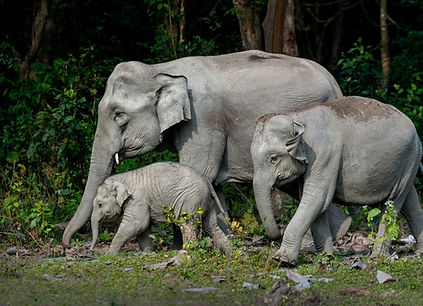
The elephant arrives at the edge of the village just after dusk, when the heat loosens its grip and the day’s noise recedes. From behind shuttered windows, the animal is seen as an intruder, too large, too close, too unpredictable. Phones come out. Someone calls the forest department. By morning, the encounter will be logged as another case of “human–elephant conflict.”
But the elephant is not lost. It is standing on a path it remembers.
Across South Asia, elephants appear in sayings that speak of patience and inevitability. These expressions were not born of distant admiration but of long familiarity. A common Bengali proverb states, হাতি নিজের রাস্তা ছাড়ে না, “Elephants do not abandon their routes.” It is often used to describe human determination, but it also reflects careful, generational observation. Elephants return to the same waterholes during droughts. They move along corridors remembered across decades. They recognise places, seasons, and individuals. CONTINUE READING...